Unlocking Growth: The Definitive Guide to the Best CRM for Marketing Agencies
In the dynamic world of marketing, staying ahead requires more than just creativity and a solid strategy. It demands efficiency, organization, and a deep understanding of your clients and their needs. This is where a Customer Relationship Management (CRM) system steps in, becoming the backbone of a successful marketing agency. But with a plethora of options available, choosing the right CRM can feel overwhelming. This comprehensive guide will navigate you through the landscape of the best CRMs for marketing agencies, helping you make an informed decision that will propel your agency towards sustained growth.
Why Your Marketing Agency Needs a CRM
Before diving into specific CRM solutions, let’s establish why a CRM is indispensable for marketing agencies. Think of it as the central nervous system of your agency, connecting all your client data, marketing activities, and sales processes in one accessible hub. Here’s why it’s crucial:
- Centralized Client Data: A CRM stores all client information in a single, organized location. This includes contact details, communication history, project specifics, and preferences. No more scattered spreadsheets or email threads!
- Improved Client Relationships: By understanding your clients better, you can tailor your services and communication to meet their individual needs. This fosters stronger relationships and increases client retention.
- Enhanced Marketing Automation: CRMs integrate seamlessly with marketing automation tools, allowing you to streamline email campaigns, social media scheduling, and lead nurturing.
- Streamlined Sales Processes: From lead generation to proposal management, a CRM helps you manage your sales pipeline efficiently, increasing your chances of closing deals.
- Data-Driven Insights: CRMs provide valuable analytics and reporting capabilities, allowing you to track key performance indicators (KPIs), measure the success of your campaigns, and make data-driven decisions.
- Increased Productivity: Automating tasks and centralizing information frees up your team to focus on what they do best: creating and executing brilliant marketing strategies.
Essentially, a CRM transforms your marketing agency from a collection of fragmented activities into a well-oiled machine, driving efficiency, improving client relationships, and ultimately, boosting your bottom line.
Key Features to Look for in a CRM for Marketing Agencies
Not all CRMs are created equal. When selecting a CRM for your marketing agency, consider the following key features:
- Contact Management: The foundation of any CRM. Look for features like contact segmentation, tagging, and detailed contact profiles.
- Lead Management: Features to track leads, qualify them, and nurture them through the sales pipeline.
- Marketing Automation: Integration with email marketing platforms, social media scheduling tools, and the ability to create automated workflows.
- Sales Automation: Features to streamline sales processes, such as proposal generation, quote management, and deal tracking.
- Reporting and Analytics: Robust reporting capabilities to track KPIs, measure campaign performance, and gain insights into your clients and your business.
- Integration Capabilities: The ability to integrate with other tools you use, such as project management software, accounting platforms, and communication tools.
- Customization Options: The flexibility to customize the CRM to fit your agency’s specific needs and workflows.
- User-Friendly Interface: A clean, intuitive interface that is easy for your team to learn and use.
- Mobile Accessibility: Access to client data and CRM features on the go.
- Scalability: The ability to accommodate your agency’s growth.
By prioritizing these features, you can ensure that the CRM you choose is well-equipped to meet the unique challenges and opportunities of a marketing agency.
Top CRM Platforms for Marketing Agencies: A Detailed Comparison
Now, let’s explore some of the best CRM platforms specifically designed for or well-suited to marketing agencies. We’ll delve into their key features, pricing, pros, and cons to help you find the perfect fit.
1. HubSpot CRM
Overview: HubSpot CRM is a widely popular, all-in-one platform known for its user-friendliness and comprehensive suite of marketing, sales, and service tools. It offers a free version with powerful features, making it an excellent option for agencies of all sizes, especially those just starting out.
Key Features:
- Contact Management: Robust contact management with detailed profiles, segmentation, and activity tracking.
- Lead Management: Lead scoring, lead nurturing workflows, and deal tracking.
- Marketing Automation: Extensive marketing automation capabilities, including email marketing, landing pages, and social media scheduling.
- Sales Automation: Sales pipeline management, deal tracking, and quote generation.
- Reporting and Analytics: Comprehensive reporting dashboards and analytics.
- Integration: Seamless integration with other HubSpot tools and a wide range of third-party applications.
- Free Version: A generous free version with essential features.
Pros:
- User-friendly interface.
- Comprehensive features, especially for marketing.
- Excellent for lead generation and nurturing.
- Strong integration capabilities.
- Free version is a great starting point.
Cons:
- Can become expensive as your agency grows and you need more advanced features.
- Some advanced features are only available in higher-tier plans.
- The learning curve can be steep for some users.
Pricing: HubSpot offers a free CRM, along with paid plans that scale based on features and usage. Paid plans start at a relatively affordable price point.
Ideal for: Agencies of all sizes, particularly those focused on inbound marketing and lead generation.
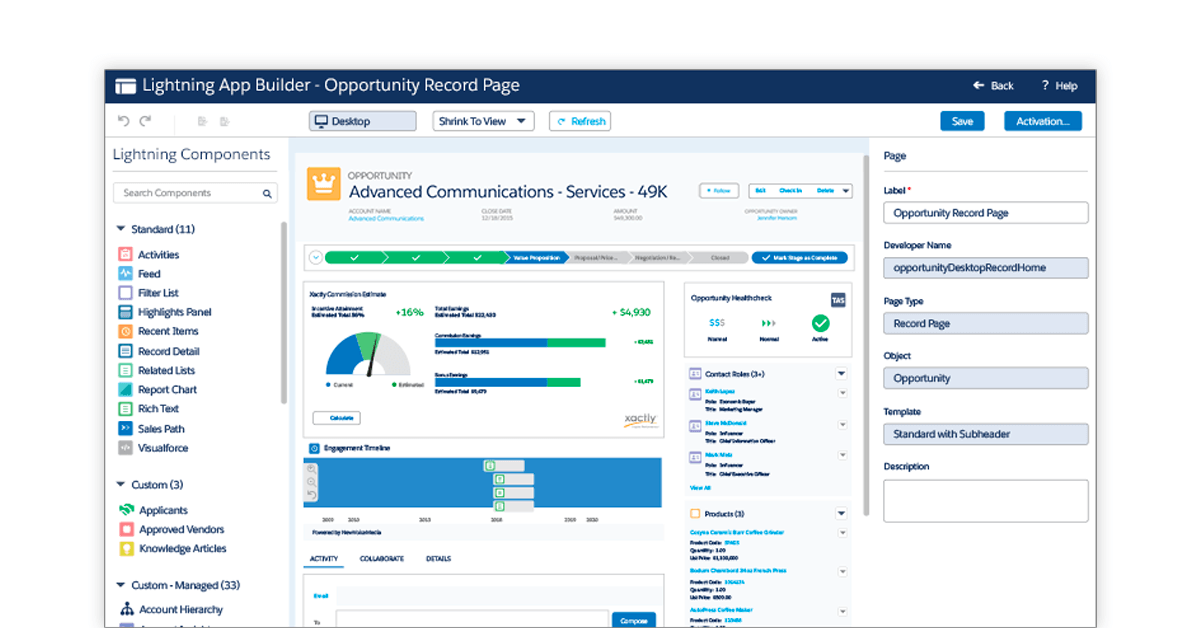
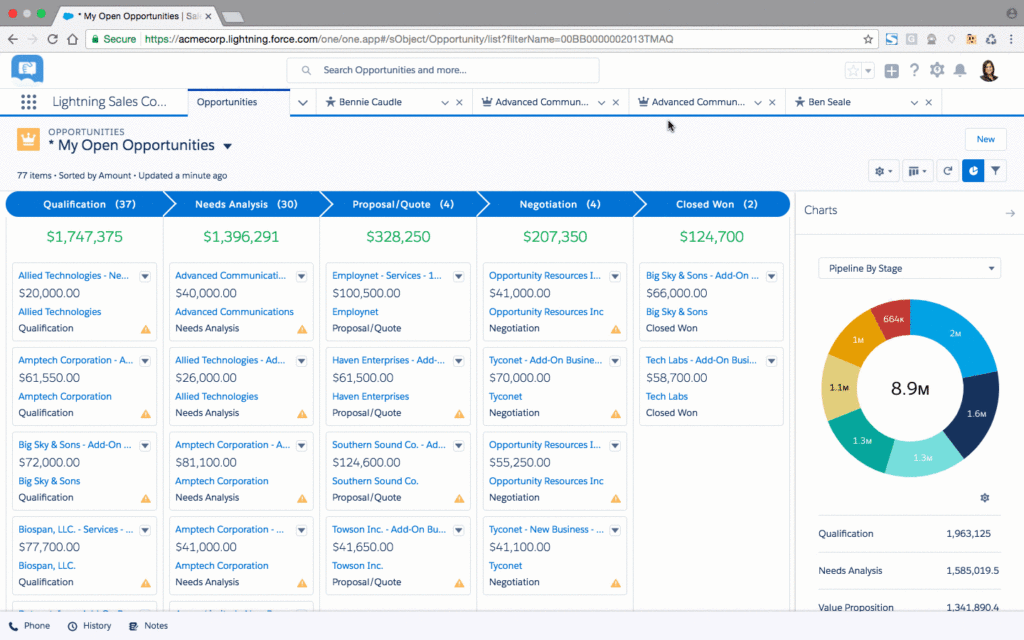
2. Salesforce Sales Cloud
Overview: Salesforce Sales Cloud is a powerhouse CRM platform, renowned for its scalability and customization options. It’s a robust solution suitable for larger marketing agencies with complex needs and established sales processes.
Key Features:
- Contact Management: Advanced contact management with detailed profiles and segmentation.
- Lead Management: Sophisticated lead scoring, lead nurturing, and sales pipeline management.
- Sales Automation: Extensive sales automation features, including opportunity management, quote generation, and sales forecasting.
- Reporting and Analytics: Highly customizable reporting and analytics dashboards.
- Integration: Extensive integration capabilities with a wide range of third-party applications.
- Customization: Highly customizable to fit your agency’s specific needs.
Pros:
- Highly scalable and customizable.
- Robust sales automation features.
- Extensive integration options.
- Powerful reporting and analytics.
Cons:
- Can be complex to set up and manage.
- Steeper learning curve.
- Expensive, particularly for smaller agencies.
Pricing: Salesforce offers various pricing tiers, with the Sales Cloud starting at a higher price point compared to other options.
Ideal for: Larger marketing agencies with complex sales processes and a need for extensive customization.
3. Zoho CRM
Overview: Zoho CRM is a versatile and affordable CRM platform that caters to businesses of all sizes, including marketing agencies. It offers a wide range of features and a user-friendly interface, making it a great option for agencies looking for a balance of functionality and affordability.
Key Features:
- Contact Management: Comprehensive contact management with detailed profiles and segmentation.
- Lead Management: Lead scoring, lead nurturing workflows, and deal tracking.
- Marketing Automation: Email marketing, social media integration, and workflow automation.
- Sales Automation: Sales pipeline management, deal tracking, and quote generation.
- Reporting and Analytics: Customizable reporting dashboards and analytics.
- Integration: Integrates with other Zoho apps and a wide range of third-party applications.
- Affordable Pricing: Competitive pricing plans.
Pros:
- User-friendly interface.
- Wide range of features at an affordable price.
- Strong marketing automation capabilities.
- Good integration options.
Cons:
- Some advanced features may require higher-tier plans.
- The interface, while user-friendly, can sometimes feel less polished than other platforms.
Pricing: Zoho CRM offers various pricing plans, with a free plan available for a limited number of users. Paid plans are competitively priced.
Ideal for: Agencies of all sizes looking for a feature-rich, affordable CRM solution.
4. Pipedrive
Overview: Pipedrive is a sales-focused CRM designed to help sales teams manage their pipelines and close deals. Its visual interface and intuitive design make it a favorite among sales professionals. While it isn’t specifically designed for marketing agencies, it can be a good option for agencies that prioritize sales and lead management.
Key Features:
- Contact Management: Contact management with a focus on sales interactions.
- Lead Management: Visual sales pipelines, deal tracking, and lead scoring.
- Sales Automation: Automated email sequences, activity reminders, and deal management.
- Reporting and Analytics: Sales-focused reporting and analytics.
- Integration: Integrates with popular tools like email marketing platforms and communication tools.
Pros:
- User-friendly interface and intuitive design.
- Excellent for managing sales pipelines.
- Strong sales automation features.
- Easy to learn and use.
Cons:
- Less emphasis on marketing automation compared to other platforms.
- May require integration with other tools for comprehensive marketing functionality.
- Limited customization options.
Pricing: Pipedrive offers various pricing plans based on the number of users and features.
Ideal for: Marketing agencies that prioritize sales and lead management and need a user-friendly CRM with strong sales automation features.
5. Agile CRM
Overview: Agile CRM is an all-in-one CRM platform that offers a comprehensive suite of features, including marketing automation, sales automation, and service desk capabilities. It’s a good option for agencies looking for a cost-effective solution with a wide range of features.
Key Features:
- Contact Management: Detailed contact profiles and segmentation.
- Lead Management: Lead scoring, lead nurturing, and deal tracking.
- Marketing Automation: Email marketing, landing pages, and marketing automation workflows.
- Sales Automation: Sales pipeline management, deal tracking, and sales automation workflows.
- Reporting and Analytics: Customizable reporting dashboards and analytics.
- Integration: Integrates with various third-party applications.
- Affordable Pricing: Competitive pricing plans.
Pros:
- All-in-one platform with a wide range of features.
- Strong marketing and sales automation capabilities.
- Affordable pricing.
- User-friendly interface.
Cons:
- The interface may not be as polished as some other platforms.
- Some advanced features may require higher-tier plans.
Pricing: Agile CRM offers various pricing plans, including a free plan for a limited number of users. Paid plans are competitively priced.
Ideal for: Agencies looking for an all-in-one, affordable CRM solution with strong marketing and sales automation features.
How to Choose the Right CRM for Your Marketing Agency
Choosing the right CRM is a strategic decision that requires careful consideration. Here’s a step-by-step guide to help you make the best choice:
- Assess Your Needs: Start by identifying your agency’s specific needs and goals. What are your biggest pain points? What features are most important to you? What are your sales and marketing processes?
- Define Your Budget: Determine how much you’re willing to spend on a CRM. Consider not only the initial cost but also ongoing costs like training, support, and add-ons.
- Evaluate Potential CRMs: Research and compare different CRM platforms, considering their features, pricing, and integrations. Read reviews, watch demos, and request free trials.
- Consider Your Team’s Technical Skills: Choose a CRM that your team can easily learn and use. A user-friendly interface is essential for adoption and productivity.
- Prioritize Integrations: Ensure the CRM integrates with the other tools you use, such as email marketing platforms, project management software, and communication tools.
- Consider Scalability: Choose a CRM that can grow with your agency. Consider its ability to handle increased data volume, user accounts, and features.
- Request Demos and Trials: Before making a final decision, request demos and free trials from your top choices. This will allow you to experience the platforms firsthand and assess their suitability for your agency.
- Get Feedback from Your Team: Involve your team in the decision-making process. Get their feedback on the platforms you’re considering to ensure that the chosen CRM meets their needs.
- Plan for Implementation and Training: Once you’ve chosen a CRM, develop a plan for implementation and training. Ensure that your team is properly trained on how to use the platform effectively.
- Continuously Evaluate and Optimize: Once your CRM is up and running, continuously evaluate its performance and make adjustments as needed. This will help you maximize its value and ensure that it continues to meet your agency’s evolving needs.
By following these steps, you can confidently choose the right CRM for your marketing agency and set your agency up for success.
Implementing Your New CRM: Best Practices
Once you’ve selected a CRM, successful implementation is key. Here are some best practices to ensure a smooth transition and maximize the value of your new system:
- Data Migration: Carefully plan your data migration strategy. Clean up your existing data and ensure that it’s properly formatted for the new CRM.
- Customization: Customize the CRM to fit your agency’s specific needs and workflows.
- User Training: Provide comprehensive training to your team on how to use the CRM effectively.
- Workflow Automation: Set up automated workflows to streamline your sales and marketing processes.
- Integration: Integrate the CRM with your other tools and platforms.
- User Adoption: Encourage user adoption by emphasizing the benefits of the CRM and providing ongoing support.
- Regular Audits: Regularly audit your CRM data and processes to ensure data accuracy and identify areas for improvement.
A well-executed implementation will ensure that your CRM becomes an invaluable asset for your marketing agency.
The Future of CRMs for Marketing Agencies
The CRM landscape is constantly evolving, with new features and innovations emerging regularly. Here are some trends to watch for:
- Artificial Intelligence (AI): AI-powered features, such as predictive analytics and automated content generation, are becoming increasingly prevalent in CRMs.
- Personalization: CRMs are becoming more sophisticated in their ability to personalize client interactions and marketing campaigns.
- Mobile Accessibility: Mobile-first design and enhanced mobile capabilities are becoming increasingly important.
- Integration: Seamless integration with other tools and platforms will continue to be a key focus.
- Focus on Customer Experience: CRMs are evolving to become more customer-centric, focusing on delivering exceptional customer experiences.
By staying informed about these trends, you can ensure that your agency is leveraging the latest CRM technologies to stay ahead of the curve.
Conclusion: Choosing the Right CRM for Your Agency’s Success
Selecting the best CRM for your marketing agency is a critical investment that can significantly impact your agency’s growth and success. By carefully evaluating your needs, researching your options, and following the best practices outlined in this guide, you can choose a CRM that will empower your team, improve client relationships, and drive revenue. Remember to continuously evaluate and optimize your CRM strategy to ensure it remains aligned with your agency’s evolving needs and goals. With the right CRM in place, your marketing agency will be well-equipped to thrive in the competitive digital landscape.